The Castle
In the winter of 1922, Kafka famously suffered “something very much like a breakdown,” which he described as “an assault on the last earthly frontier.”1 Two clocks had fallen out of sync. One limped through the routines of his social life; the other accelerated in the alienating solitude of writing toward a limit he could no longer endure. Exhausted by relentless introspection, he feared losing his footing altogether. “Kafka would require more time, but he would also need less world”.2 In the following days, Kafka withdrew to the snowbound resort of Spindlermühle and began what would become his final novel.
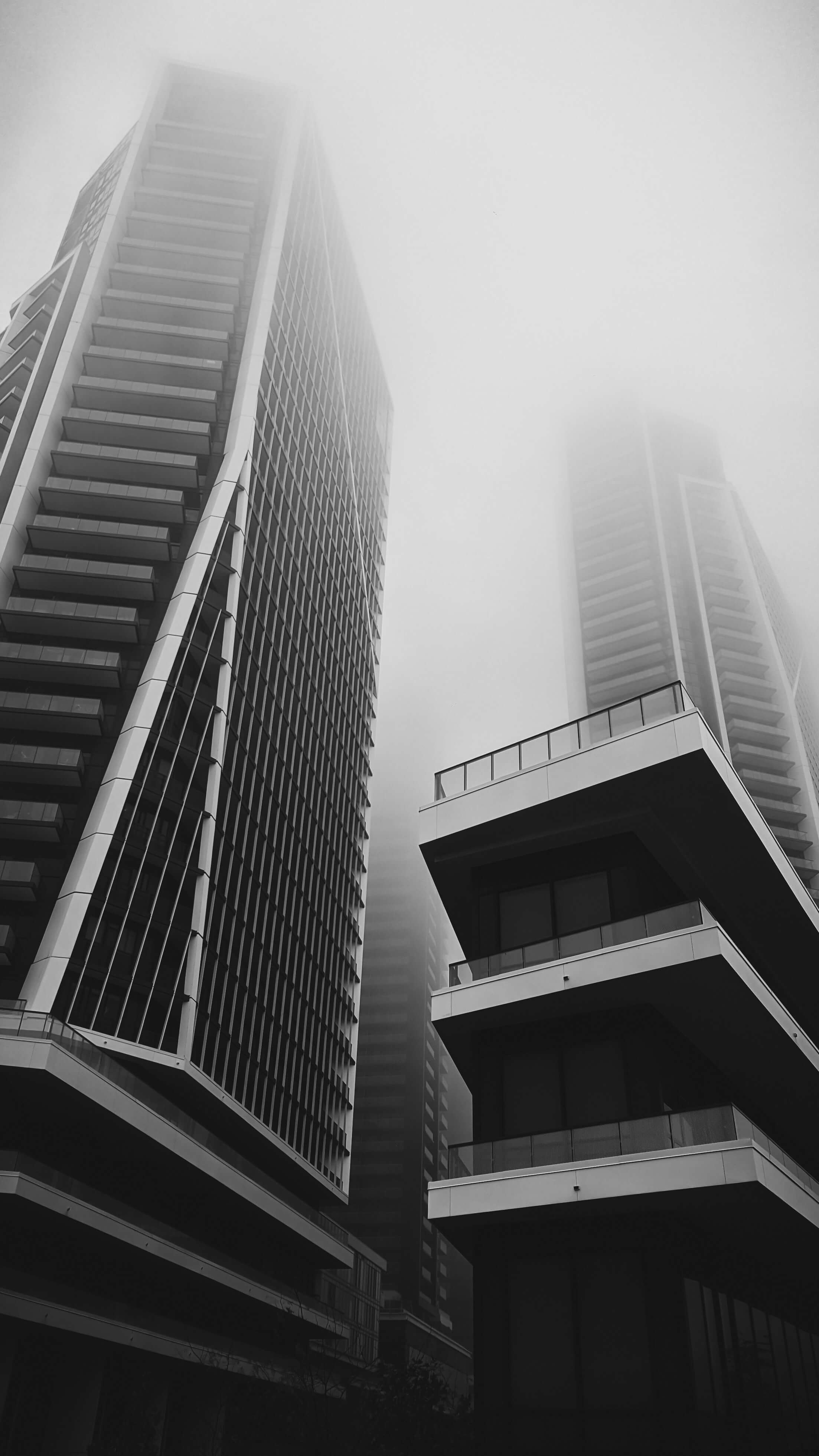
Adorno’s insight is that The Castle is not symbolic but literal.3 It is a labyrinth of deferred authority, inaccessible by design, sustained through mediation and the anxious compliance of those within it. Kafka mapped a logic intrinsic to power that techno- capitalism now instantiates. Beginning from Deleuze, Mark Fisher identifies in Kafka the “negative atheology” of late capital: a cybernetic mode of governance that operates through postponement rather than command.4 Authority is never absent, only disavowed. Capital, the Market, the Algorithm are treated as inevitable, capturing time, predicting behavior, converting life into data to be governed. Systems that promise intelligence only intensify this dynamic, making it ever more opaque, automated, and personalized. When the Castle denies a loan, blocks or bans you online, or renders your work obsolete, power is felt but never seen. The Castle is not a coherent totality waiting to be found out; it is an architecture of control that sustains endless pursuit without arrival.
Never clearly distinct from the Castle, the village is our workaday infrastructure of shame where all relations —social, creative, private— are vulnerable to capture by the transactional logic of capital. When worth is defined only by what can be processed and monetized, it is lived as guilt around being unproductive, fear of falling behind, the threat of being automated out of relevance. Anxiety follows whenever we fall out of sync or leave our lives undocumented. Having normalized the Castle as inevitable, external surveillance gives way to the internal policing of ambition, comparison, and self-assessment. There is no final authority to appeal to, yet we behave as if there were. The machinery no longer needs a center once bureaucracy and shame do the work. Even as the villagers constantly gossip, fumble, and squabble, competence is not required, only participation. Overt, authoritarian violence persists —which Kafka made more explicit in The Trial— but power increasingly operates without the need to announce itself.
“The system’s power comes not from its truth but from everyone’s willingness to perform as if it were true. And its fragility comes from the same source: when even one person stops performing.”5
Kafka observed authority that governs through absence depends on impatience. In a system where one’s legitimacy is perpetually in question, we chase recognition and validation, calibrating our hopes and fears toward social status and securing our place within the machine. Power captures and exploits that desire by keeping it in constant deferral. Alternatives are not denied so much as postponed; it is always grow now, repair later. Never satisfied, the grind becomes exhausting not because it is busy, but because it is endless. Even provisional success is structurally insecure by design, contingent on continual performance. This is not the condition of those excluded from the world, but the restlessness of those fully absorbed by it. Life under the Castle can feel comfortable, meaningful, even successful, while still reproducing its terms. When we are reduced to nothing but our part in the machine —bound by compulsion rather than belief— we become complicit in what it exploits and destroys, even as we protest it.
Kafka does not resolve this tension; he makes it felt. He pursued writing to the point where it no longer promised completion, only endurance without reconciliation. His art, as Blanchot writes, is the “consciousness of this misfortune.”2
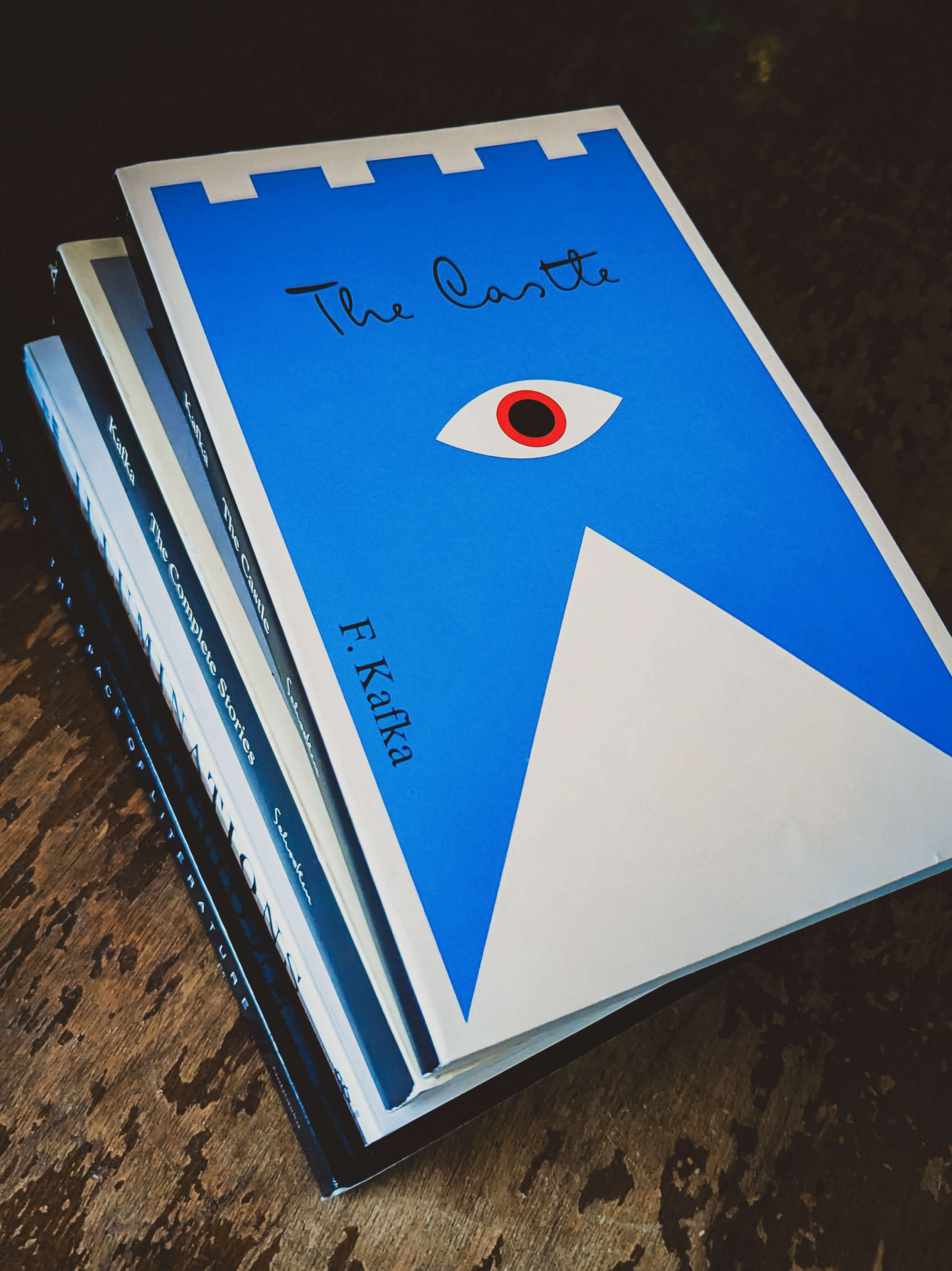 Photo by Beingcompiled
Kafka left his novel unfinished. Amalia is the only character whose plot is complete. Tearing up the vulgar invitation of a male official, she openly refuses the Castle, and is permanently shunned by the villagers. By losing everything, she is left with the only freedom available when the Castle can no longer dictate one’s internal worth because it has nothing left to take. But this freedom, as martyrdom, comes at the cost of her social life.
K.’s plot remains unresolved. His restlessness is often read as resistance, an attempt to force the system to acknowledge him. As Arendt notes, K.’s insistence on universals —work, belonging, rights— places normative pressure on the Castle, quietly exposing its illegitimacy.6 By interrogating the Castle, K. reveals its incoherence without ever breaking with its terms. He does not resist its authority so much as endure it. As noise without an assigned function, he remains unfinished, misaligned, and exhausted within a structure he never settles into or exits. Attrition is not resistance as action but as tempo — the slowing down within systems calibrated for prediction, optimization, and completion; the refusal to move at the speed the system demands. To be finished is to be either expelled or subsumed. The former is exile; the latter is the death of a life beyond one’s function.
“Oh, plenty of hope, an infinite amount of hope-but not for us.”7
Kafka’s refusal of narrative closure is an art without resolution. No final judgment or interpretation arrives. What remains is destitution. Authority persists as an “empty gesture”,7 but its boundaries and mediators made legible and its claims to legitimacy rendered inoperative.8 This is not freedom as mastery or escape, but freedom from the illusion of redemption.
Yet it is not without joy.9 Kafka is darkly comic in his surreal reversals, moments when power and language are pursued to exhaustion and the world they sustain collapses into dreamlike absurdity, where “everything leads to laughter.”10
What does the land surveyor glimpse at night, half-asleep, trudging through snow-covered fields?
“A picture of my existence… would portray a useless stake covered with snow and frost, fixed loosely and slantwise into the ground in a deeply ploughed field on the edge of a great plain on a dark winter’s night.” —Kafka
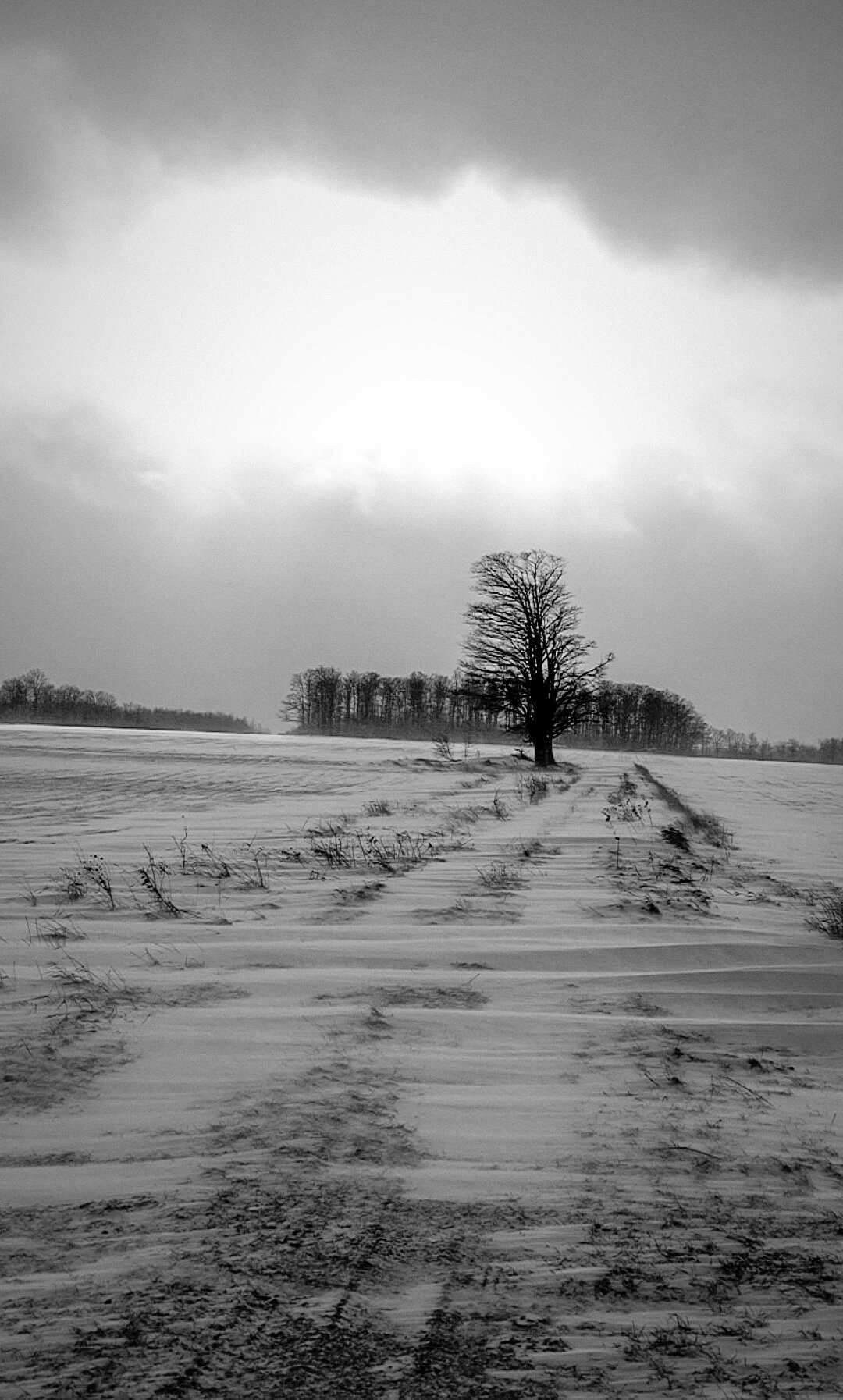 Photo by Beingcompiled
-
Kafka, Franz. “The Diaries of Franz Kafka 1910 – 1923”. Schocken Books. New York. ↩
-
Blanchot, Maurice. “The Space of Literature”. U of Nebraska Press, 1982.\ ↩ ↩2
-
Adorno, Theodore. “Prisms”. MIT Press, 1981. ↩
-
Fisher, Mark. “Capitalist Realism”. Zer0 Books, 2022. ↩
-
Carney, Mark. “World Economic Forum in Davos, Switzerland.” Jan, 2026. ↩
-
Arendt, Hannah. “Essays in Understanding, 1930-1954”. Schocken Books. New York, 2011. ↩
-
Benjamin, Walter. “Franz Kafka on the tenth anniversary of his death (1934)”. “Walter Benjamin: Selected Writings, Volume 2: Part 2”. Belknap Press, 2005. ↩ ↩2
-
Agamben, “The Work of Giorgio Agamben. Law, Literature, Life”. Edinburgh University Press, 2011. ↩
-
Snoek, Anke. “Agamben’s Joyful Kafka: Finding Freedom Beyond Subordination”. Bloomsbury Publishing, 2012. ↩
-
Deleuze and Guattari. “Kafka: Toward a Minor Literature”. University of Minnesota Press, 2003. ↩